PSC Consulting
A complete website rebuild for PSC Consulting, delivered alongside their marketing team over three months. Measurable wins on performance, accessibility, and search.
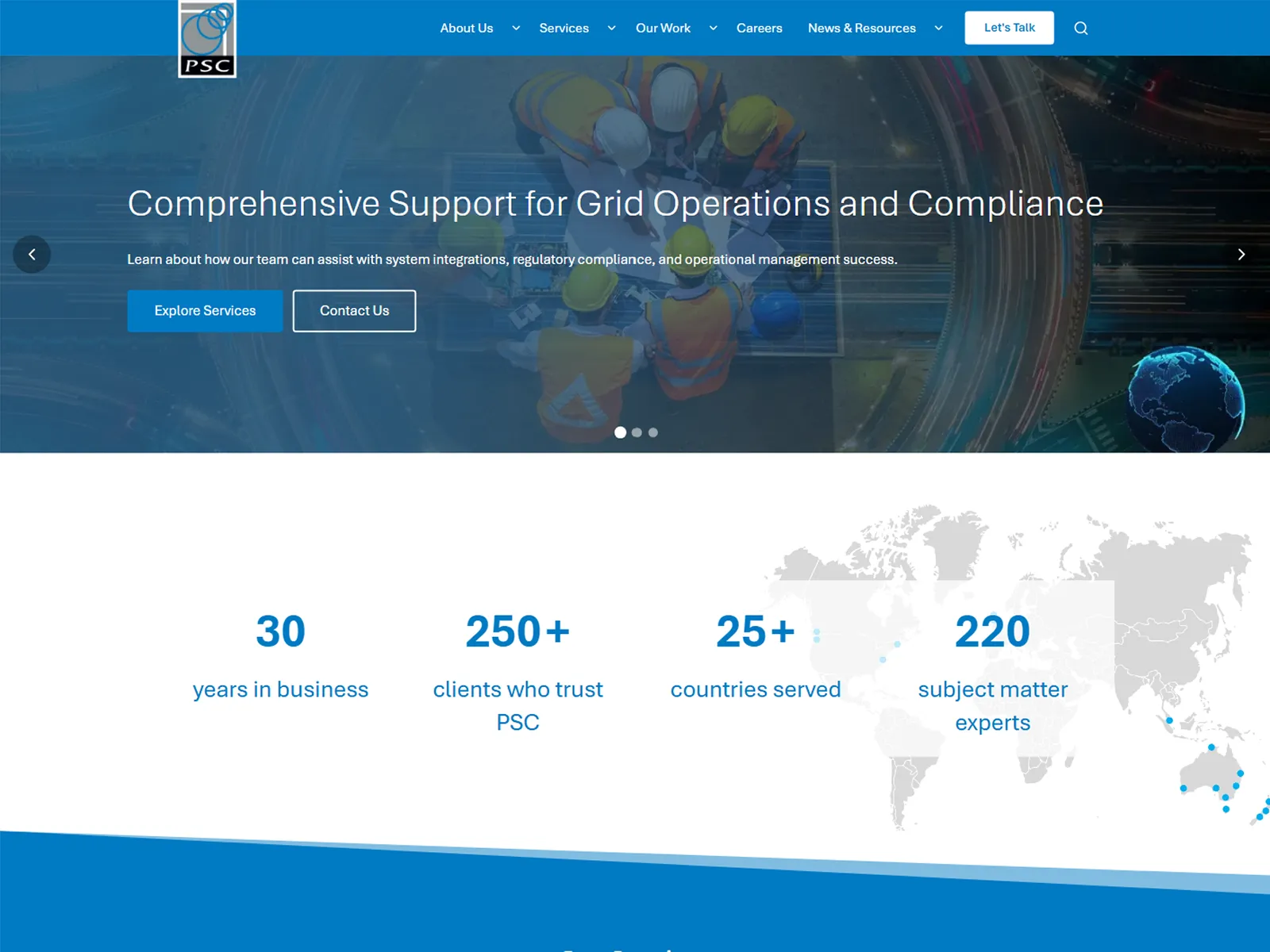
PSC needed a marketing site that matched the standard of their work — faster, more accessible, easier for their marketing team to update day-to-day, and built to perform in search. The existing site, on WordPress, had drifted from those marks over years of incremental changes.
What needed solving.
Three problems stacked on top of each other.
Performance had decayed. Lighthouse scores sat in the mid-60s — slow pages, slow interactions, and an accessibility score well below what modern sites ship with.
The CMS created friction for the internal team. Small content updates that should have taken ten minutes often required developer intervention, which slowed marketing’s tempo on every campaign.
Search had drifted too. The site’s metadata, structured data, and URL structure had aged into a state that wasn’t doing the team any favors in organic.
The rebuild had to fix all three at once: performance, accessibility, and search, on a CMS the marketing team could actually move in.
How the work was structured.
The work ran for roughly three months in parallel with PSC’s other marketing efforts. A few decisions shaped the outcome.
The new site was built on HubSpot CMS, in tight integration with PSC’s existing HubSpot CRM. Forms, contact properties, and lifecycle workflows now flow into the same system the sales and marketing teams already work in — no platform seam in the middle of the customer’s path.
Custom modules are the technical centerpiece of the engagement. Purpose-built components for PSC’s specific content patterns. The marketing team got real editing control over the components that shape every important page, so a campaign-specific update no longer requires filing a developer ticket.
SEO preservation was non-negotiable. Redirects, metadata, structured data, and URL structure mapped forward so the rebuild didn’t cost organic visibility — and the redesign added headroom on top.
Accessibility was a full reset rather than a patch. The previous site’s accessibility score was the product of years of incremental changes; the new build got proper semantic structure, keyboard paths, and color contrast from day one.
What changed.
Two weeks post-launch, the numbers were in.
- Lighthouse Performance
- 93+30
- Lighthouse Accessibility
- 97+12
- Lighthouse SEO
- 92+7
- Loading speed
- 35% faster
A look at the work.
“Three months is a tight runway for a full rebuild. What made it work was a sharp focus on the work that actually moves the needle: performance, accessibility, search visibility, and a tight CRM connection that puts the new site inside the system PSC’s sales and marketing teams already use. The custom modules are where the day-to-day value lives — marketing can ship campaign-specific pages without filing a developer ticket. That’s a pattern I’ll repeat.”
Working on something similar? Here’s the tier.
Extended Build — A larger build with deeper scope, advanced interactions, and more thorough SEO and AEO work. 6–8 weeks. Fixed price.